September 2026
Three outreach events this month. The first was a new one for the Quekett, the annual Encaenia of the British Naturalists’ Association in the Natural History Museum. They had a talk on microscopy, and I took my trinocular Olympus SZ-4045 stereo microscope plus my Canon EOS 5D Mark II digital SLR and my laptop with EOS Utility. I also used the laptop to show the new PowerPoint slide show of photomicrographs by Quekett members.
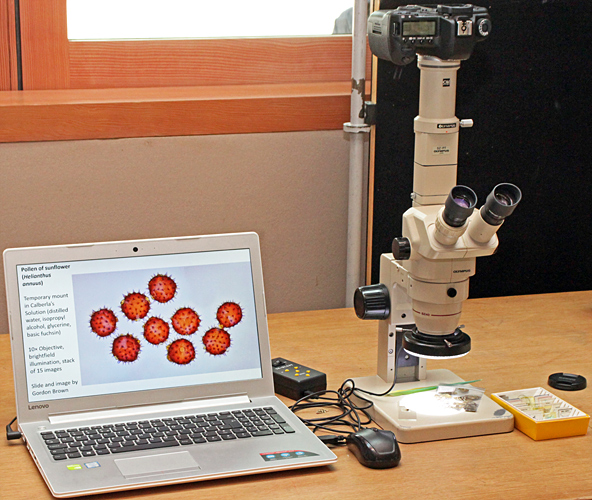
Slide show and trinocular stereo microscope
Robert Ratford provided several specimens including butterfly wings, and I took one home to photograph, raised above a black background in my shadowless illuminator:
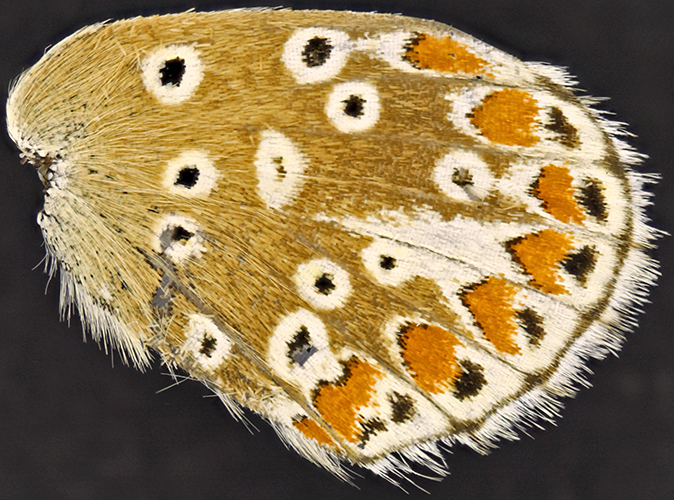
Underwing of Brown Argus (Aricia agestis)
The next day was Open Day at Wimbledon Common, where the Quekett has been participating for over 20 years. I took a small stereo microscope as well as my usual Olympus SZ-4045, and used them to show specimens from the pond in the Wildlife Garden as well as other specimens from the Common.
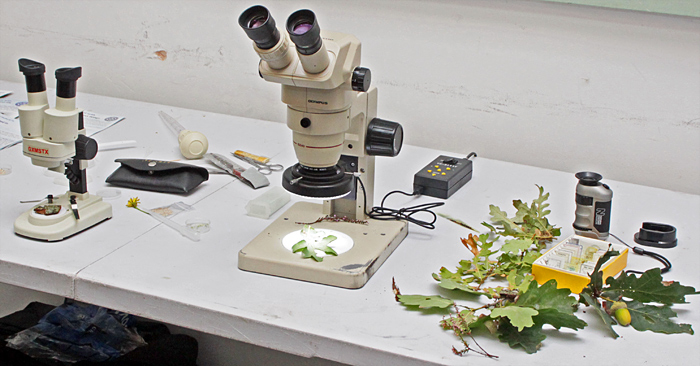
Stereo microscopes
I went to a small oak tree that Dennis Fullwood showed me back in 2014, and collected a leaf with several spangle galls. I forgot to take the leaf home, so I used an old photo in the meeting report:
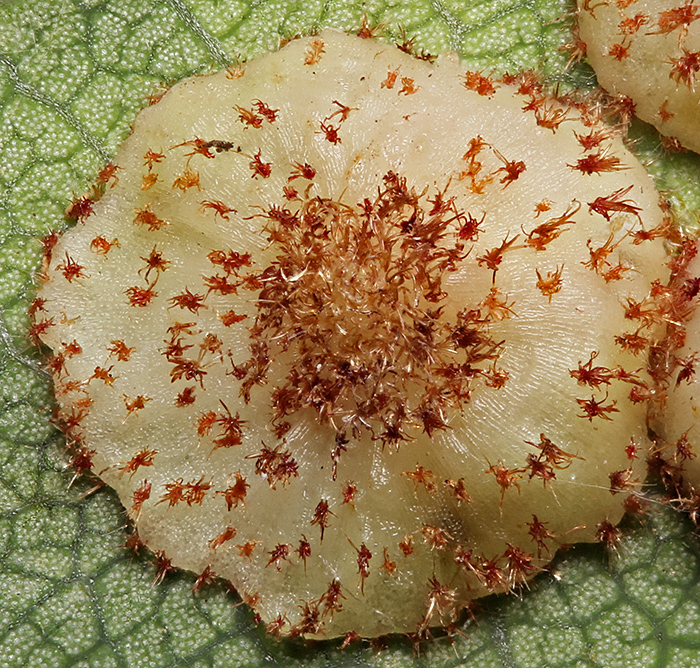
Common spangle gall on oak leaf (caused by the gall wasp Neuroterus quercusbaccarum)
The next weekend was Apple Day in Chinbrook Meadows, another outing for my Olympus SZ-4045 stereo microscope wth a ring-light running from a power bank.
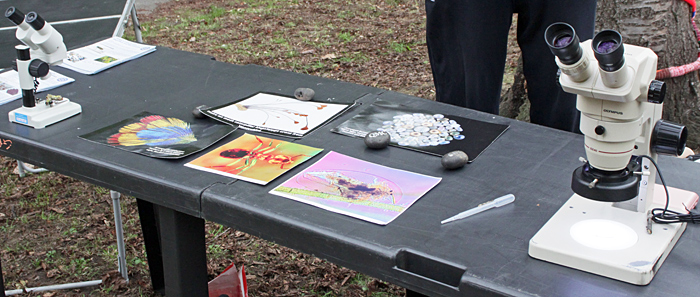
Stereo microscopes
Nigel Ashby collected specimens from the ponds, and I picked up twigs and bark under the trees to look for lichen. Visitors pinched the best specimens, but I found a crustose lichen to take home and photograph with my shadowless illuminator.
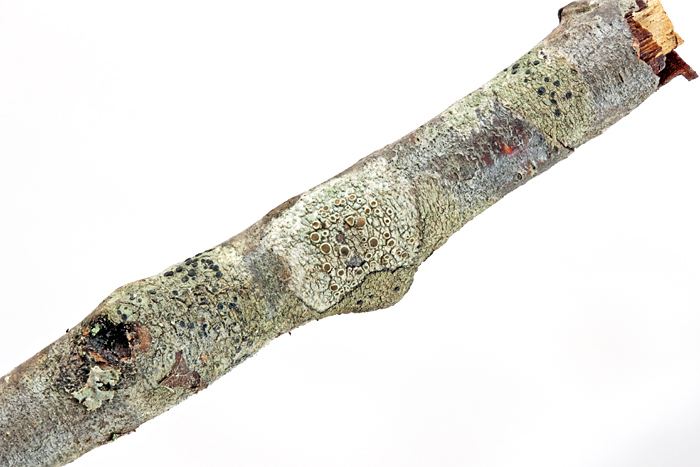
Twig with crustose lichen
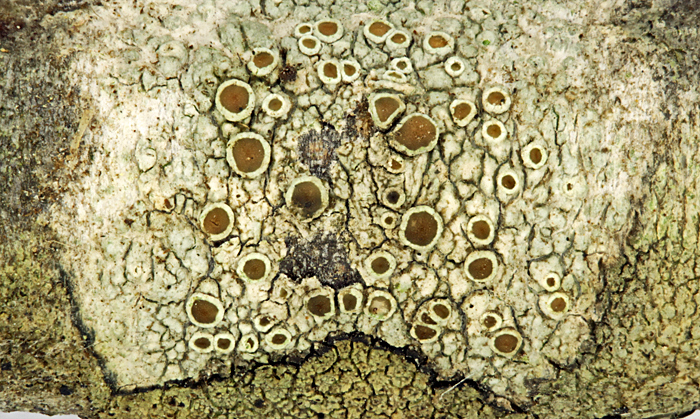
Crustose lichen (? Lecanora sp.)
August 2026
I don’t often get a chance to go pond-dipping, so I enjoyed the excursion to Warnham Local Nature Reserve on 1st August. The dipping ponds had completely dried up, and the ornamental Shelley pond had hardly any water, but the millpond was still at its normal level.
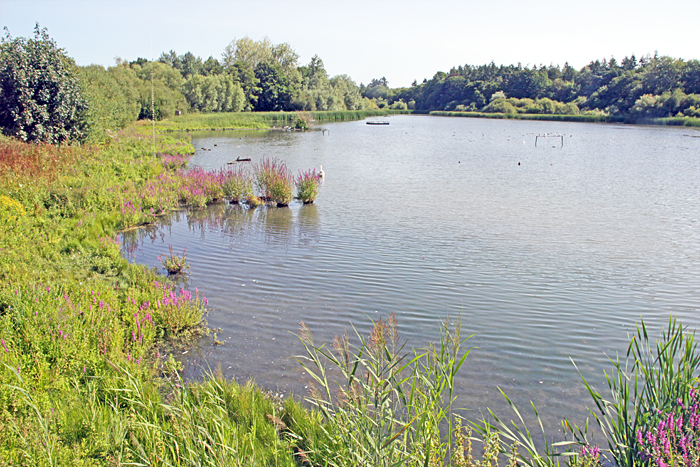
Millpond at Warnham LNR
I still have a few microscope items that I don’t need, so I sorted out a few to try to sell at Microscopium on 8th August.
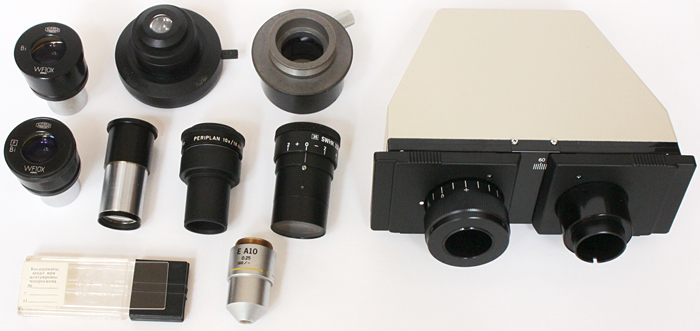
Items to sell at Microscopium
I finally managed to sell two of the items, a Leitz Periplan eyepiece with a 28 mm thread for £15 and an Olympus PM-ADF Eyepiece Adapter with rusty screws for £5. I also sold a pair of Olympus 10× eyepieces for an Olympus BH for £10, to someone who had just bought a BH lacking eyepieces.
Down House is very difficult to reach by public transport, but Lisa and Nigel Ashby gave me a lift from Grove Park for the second day of the microscopy weekend. I took my Olympus SZ-4045 stereo microscope, and helped out when other Quekett members needed a break. Visitors sometimes need to queue, so I had prepared a PowerPoint slide show of photomicrographs by Quekett members.to keep them entertained.
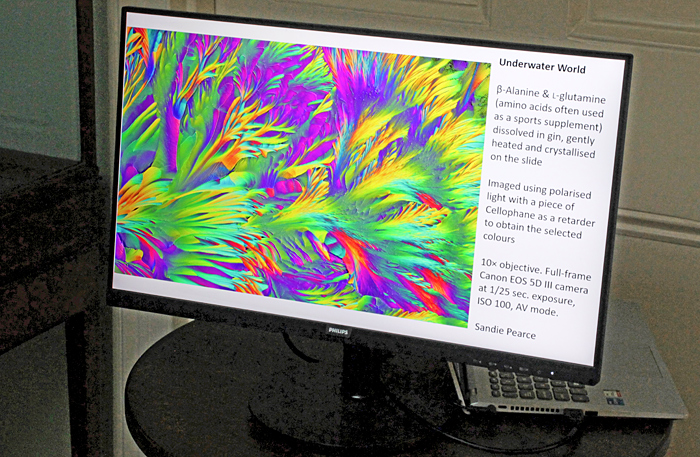
Slide show
July 2026
A few years ago, I bought an Olympus BHMJ metallurgical microscope complete with a BH2-MA Brightfield Vertical Illuminator and 2.5×, 5×, 10×, 20× and 50× MSPlan objectives. I use the illuminator, objectives and nosepiece on my BHT stand. I have tried to use the BHMJ stand a few times, but with a trinocular or binocular head the focus drifts downwards, even with the course focus tension set very high. I asked for advice on the Olympus Microscope Users Group on Facebook, and learned that it needs to be stripped down and re-lubricated, and that it might still drift. I have decided to keep the focus block, because I might use it for stacking specimens that need to be moved horizontally. However, the stand has a non-standard column diameter and takes a non-standard stage plate, so sadly it is going in the bin.
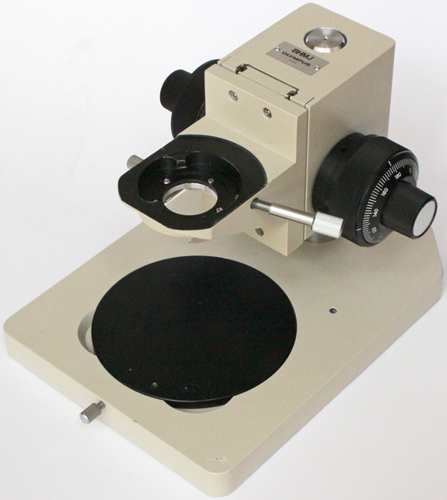
Olympus BHMJ stand
June 2026
I keep an eye on a few microscopy groups on Facebook, to learn things and to answer questions. In the Olympus Microscope Users Group, someone asked how to connect an Olympus Tough TG5 to the trinocular head of a BH-2. This is how I started digital photomicrography with a Nikon Coolpix 990 and a Kodak DC4800, with an adapter that clamps onto the circular dovetail and provides a 28 mm thread.
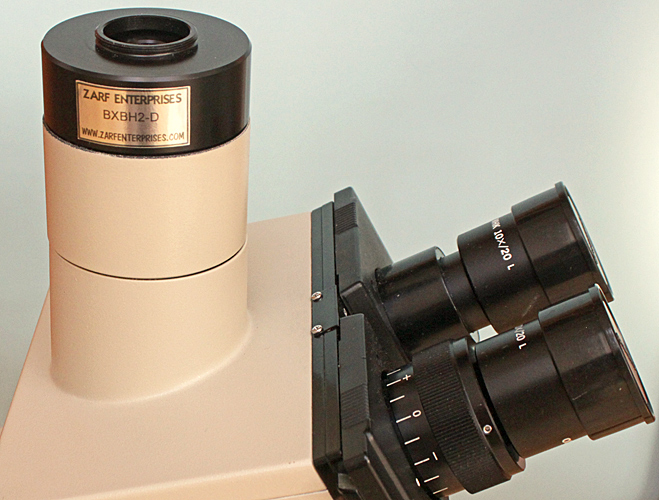
28 mm adapter for a BH2-TR30 trinocular head
I still have the Zarf Enterprises BXBH2-D adapter, but now I use it as a dust cover, with a filter to close the hole.
Back to the Natural History Museum on 13th June for the Workshop on Cladocera. This didn’t go as planned and turned into a pond-dipping session in the Museum’s Nature Discovery Garden, where we attracted a lot of attention from visitors. We took two trays of specimens back to the Angela Marmont Centre.
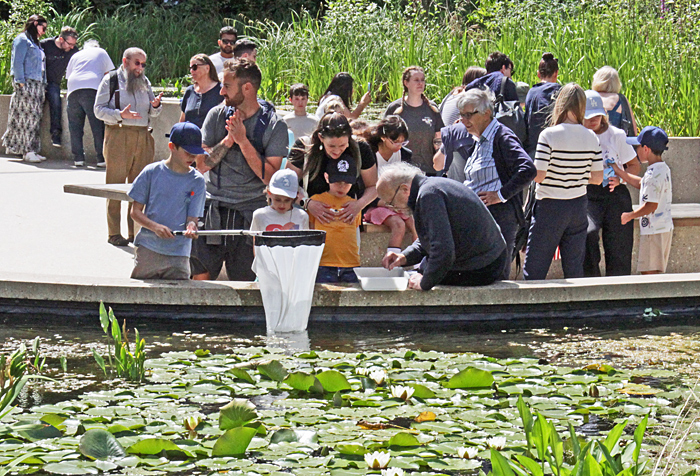
Collecting with a pond net
I miss the well-attended Quekett pond-dipping excursions to Brookwood and Wimbledon Common, but nobody seems interested these days.
I took my trinocular Olympus SZ4045 stereo microscope to the Amateur Entomologists’ Society Members’ Day in the Natural History Museum on 6th June, so that I could show how easy it is to take photomicrographs with a full-frame Canon digital SLR camera tethered to a laptop with the free EOS Utility software.
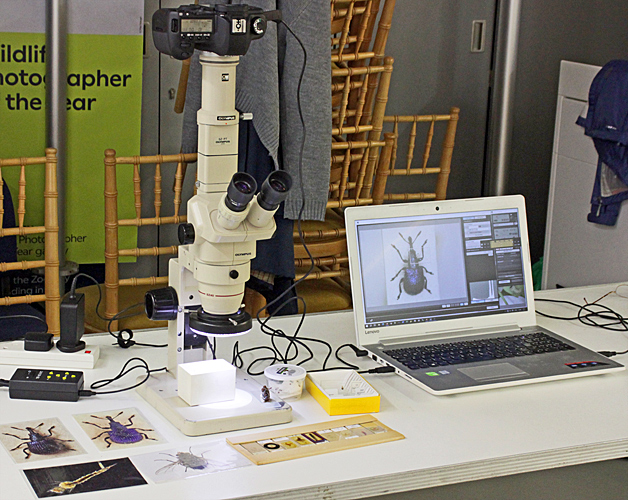
SZ4045 stereo microscope set up for photomicrography
One of the members brought some eggs and tiny newly-hatched larvae of the Atlas moth (Attacus atlas):
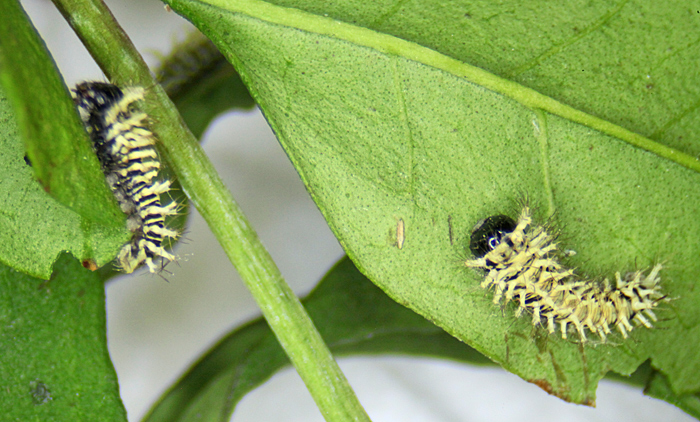
Atlas moth caterpillars under the stereo microscope
I also took some of the slides of insects that I have acquired over the years, mostly at microscope club meetings.
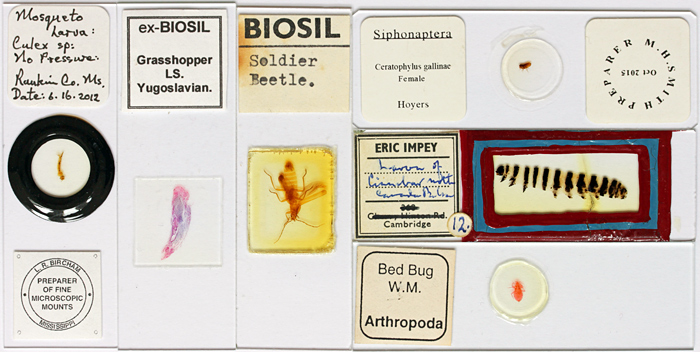
Insect slides
May 2026
The Quekett’s latest leaflet (Things to look at with microscopes: Exploring polarised light) mentions using a stereo microscope, something that I have not tried before. It requires a light source for transmitted light, and I have an LED stage plate for my Olympus SZ4045. For the polariser, I used a camera polarising filter resting on the stage plate. It also needs an analyser above the specimen, and my SZ4045 has a 48 mm thread for attaching supplementary objectives, so all I needed was a 48-49 step-up ring from eBay to attach another camera polarising filter. It worked, the two filters gave good extinction when crossed, and the LED stage plate provided enough light. It provides a much wider field of view than a compound microscope, but lower magnification. I took it to the “Diseases and afflictions” gossip meeting in the Natural History Museum, with some suitable slides.
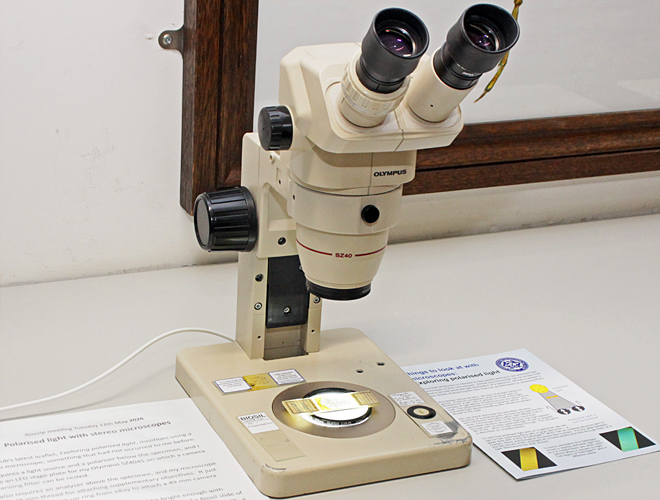
SZ4045 stereo microscope set up for polarised light
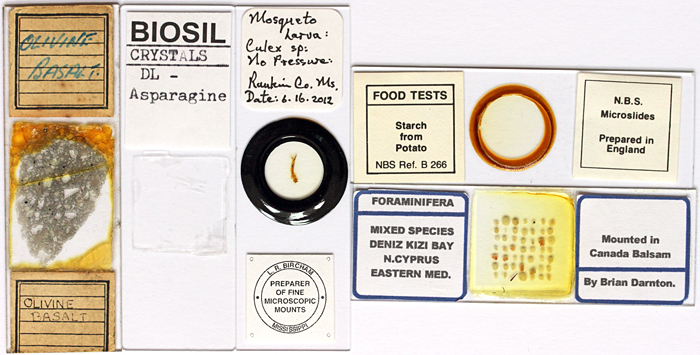
Slides for polarised light
I also took a few slides relevant to the topic of the meeting, Pulex irritans (human flea), Ascaris (nematode), malaria parasite (Plasmodium), bed bug (Cimex lectularius) and tapeworm proglottid (cestode).
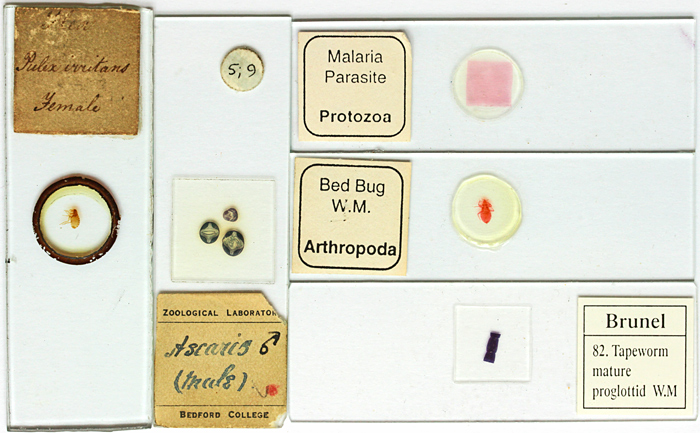
Slides of diseases and afflictions
I am still hoping to find a good, quick and inexpensive way to take photomicrographs at Quekett meetings. Back in October 2019, I checked 15 eyepieces with a T-mount camera adapter that clamps onto a standard 25 mm (external diameter) eyepiece tube. I expected that the lowest powers would have the widest fields of view, but the results were mixed. Since then, I have sold most of the eyepieces cheaply at Club meetings (but I have kept the FK and NFK photo eyepieces), and I have bought a few more that I have recently checked with a 20× objective and 1 mm stage micrometer. For a few minutes I thought I had finally found a low-power eyepiece with a wide field of view, the Olympus NK 5× L.
| Eyepiece | Field of view |
|---|---|
| Zeiss Kpl 8x/18 | 0.87 mm |
| Carl Zeiss C5× | 0.98 mm |
| Olympus NK 5× L | > 1 mm |
Then I remembered the tests that I did in April 2024, when instead of looking at a stage micrometer, I took photomicrographs using the eyepieces to project a real image onto the camera sensor. So I set up my trinocular CHS with my Canon EOS 40D tethered to my computer (with EOS Utility). Sadly, just as in 2024, the Olympus NK 5× L was very poor away from the centre, with vignetting caused by the field iris. The newly-acquired Carl Zeiss C5× did not show vignetting, but the corners were very distorted. As in 2024, the Zeiss Kpl 8×/18 gave a sharp image but with a smaller field of view. In fact the Zeiss looked so good that I decided to try it with a full-frame camera, my EOS 5D Mark II, and it worked really well with a flat image sharp almost to the corners. There was a tiny bit of vignetting with a 4× objective, but no vignetting with a 10×.
So I will be selling the Carl Zeiss C5× at Microscopium, keeping the Zeiss Kpl 8×/18 to use with the T-mount adapter for demonstrations, and keeping the Olympus NK 5× L with the inclined monocular head for my CHS because of its wide field of view.
Here are my latest test photos of axolotl liver with an Olympus SPlan 4× objective, a Zeiss Kpl 8×/18 eyepiece and a T-mount adapter. They are single shots, not stacked and not cropped. With my EOS 40D (APS-C sensor), the image is sharp into the corners. With my EOS 5D Mark II (full-frame sensor), the image is not sharp in the corners, and there is some vignetting.
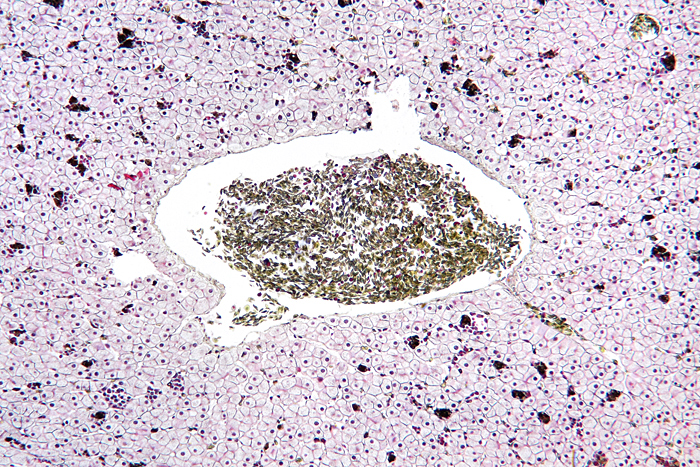
Zeiss Kpl 8×/18, T-mount, EOS 40D
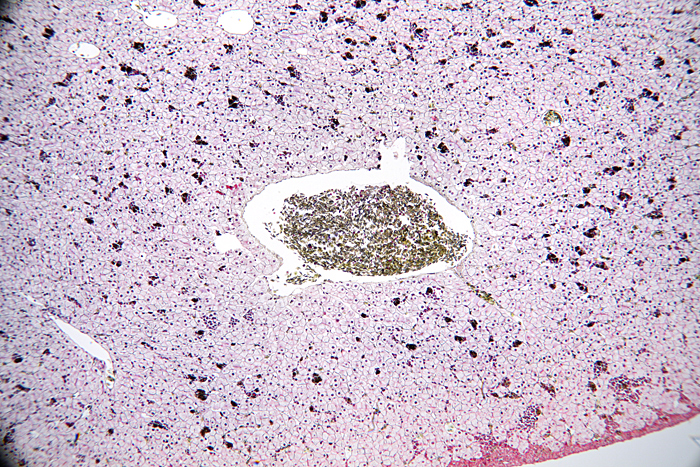
Zeiss Kpl 8×/18, T-mount, EOS 5D Mark II
Here are my latest test photos of axolotl liver with an Olympus SPlan 4× objective and an afocal system with a Periplan 10×/18 attached to an Olympus Zuiko 50mm f/1.8 standard lens. They are single shots, not stacked and not cropped. With my EOS 40D (APS-C sensor), the field of view is wider than the Zeiss, but the image is not sharp in the corners. With my EOS 5D Mark II (full-frame sensor), the field of view is huge, but the quality falls off outside the area that the APS-C sensor captures.
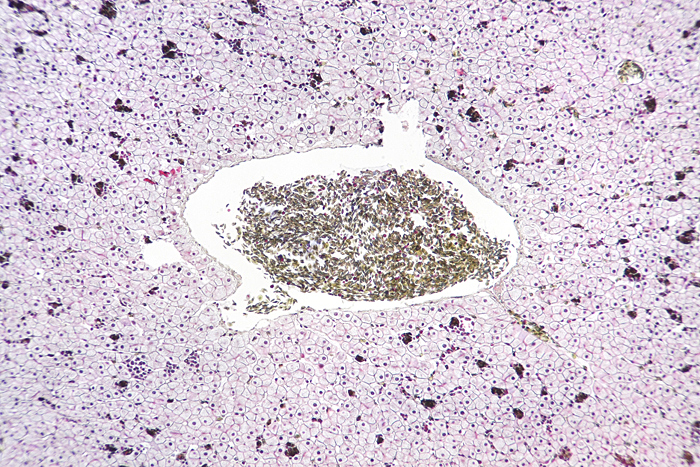
Periplan 10×/18, afocal, Zuiko 50mm f/1.8, EOS 40D
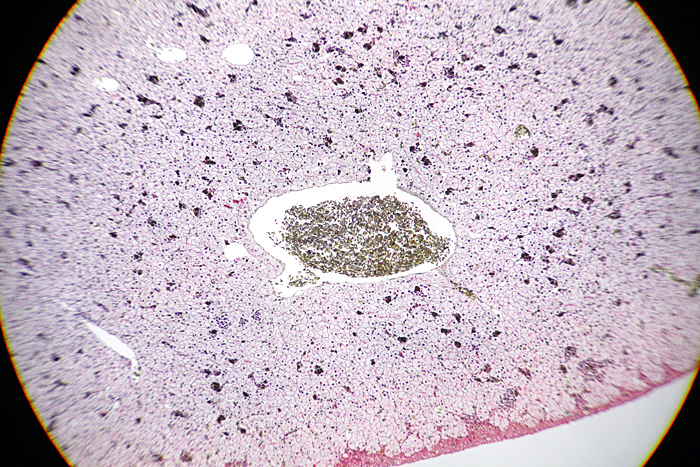
Periplan 10×/18, afocal, Zuiko 50mm f/1.8, EOS 5D Mark II
The Zeiss Kpl 8×/18 eyepiece with a T-mount adapter gave the best image. However, the eyepiece is not held firmly in the adapter and would hit the mirror in the camera if it was facing up, so this is not really a suitable arrangement for taking to Quekett meetings.
In the afocal arrangement, the Periplan 10×/18 gives a wider field of view than the Zeiss Kpl 8×/18, with just a small loss of quality in the corners. The eyepiece is firmly attached to the Zuiko lens via the filter thread and so there is no risk to the camera, and so far this is the best arrangement to take to meetings.
April 2026
I recently discovered that Pacific Rim Camera has a website with a Reference Library that contains thousands of good free PDFs of literature from dozens of manufacturers, including Olympus. The Olympus collection even includes the Sales Reference File and some other interesting macro and photomicro items.
They had lots of material that I wanted to include in my Olympus OM 35mm film system close-up and macro equipment website. However, I had not previously included any PDFs as part of HTML pages, only as linked documents. I experimented with including the PDFs using the HTML <embed>, <iframe> and <object> tags, and I also tried Adobe’s official PDF Embed API. None of them worked consistently with all of the major web browsers, but <iframe> worked best for me. You can see some examples of the updated pages here:
The old documents included accessories that I had not seen before, the SZ-PO-P Polarizer and three analyzers. I also added a photograph of the prototype Auto Bellows S with tilt and shift movements, which was never produced for sale.
I finally managed to find time to photograph the Aperture Iris Diaphragm that I acquired at the Quekett Spring Sale last month.
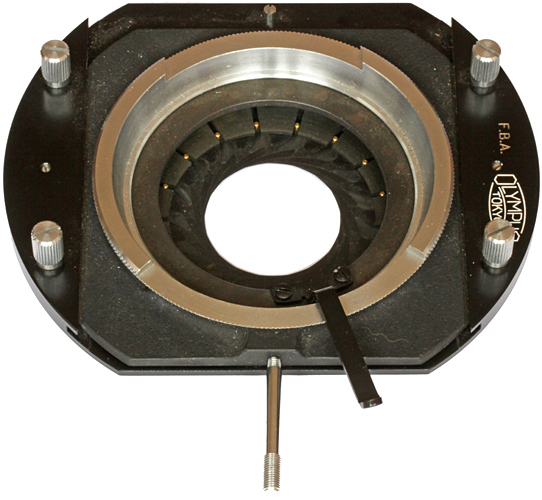
Aperture Iris Diaphragm
It fits the trans-illuminator base that was available for several Olympus stereo microscopes in the 1970s and 1980s. This is the same base as the X-DE Trans-Illuminator Base that was part of the OM macrophoto group, but Olympus did not mention the Aperture Iris Diaphragm in their OM literature. I tried to attach it on top of the base, before realising that it has to be attached underneath the top. The four threaded holes in the top of the base and the small hole in the front of the top have puzzled me for years, and now I know what they are for.
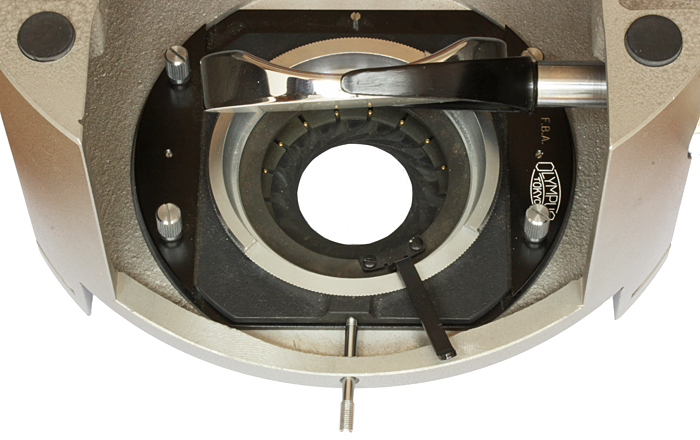
Aperture Iris Diaphragm attached to X-DE base
The iris has 17 blades and can be adjusted from 2 mm to 40 mm. It can also be offset by up to 5 mm for oblique illumination.
March 2026
It is a long trip by public transport to the Quekett Spring Sale a few miles outside Reading, about 3½ hours, but it is a good opportunity to catch up with old friends and to meet real people who I have previously only met on Facebook. I managed to sell the stage plates, an Olympus CT-4 phase telescope and the Zeiss centring slide. I bought a blue Olympus KB-4 filter as originally supplied with the BHT, BHS and early BX microscopes. I don’t really need it, but it was only £1, and I have added it to my box of small BHT accessories. It is only for viewing, not for photography. I also found an Aperture Iris Diaphragm (an obscure accessory for the X-DE Trans-Illuminator Base), so now I need to photograph it for my website.
For the Quekett Spring Sale (which has replaced the Reading Convention) at Sonning Common Village Hall, I sorted out a few items that I no longer need. My Olympus SZ4045 stereo and Macrophoto Stand VST-1 take the same 100 mm stage plates, and I found that in addition to good sets for each, I had a couple of spares. In my box of oddments, I found two centring slides, one by Lomo and one by Zeiss. I don’t know what to do with them, but perhaps someone will want them. I will have another go at selling an Olympus PM-ADF eyepiece adapter for £5 and a Leitz Periplan eyepiece with 28 mm thread for £15, far less than they fetch on eBay.
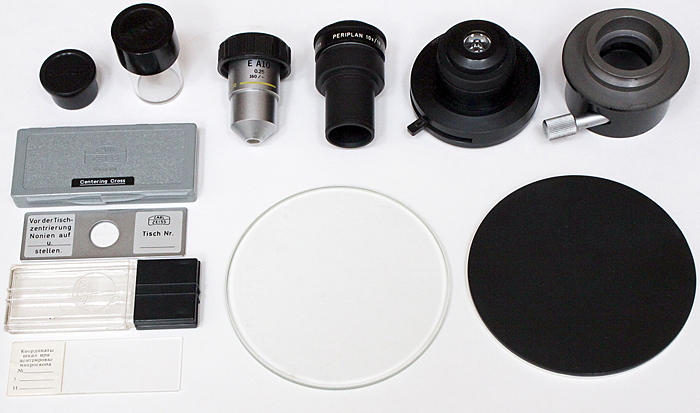
Surplus items for sale at Sonning Common
At the Home Counties Meeting in Cobham, Robert Ratford arrived with a huge Olympus BX51M metallurgical microscope. I had a PDF of the instruction manual, so now Robert can work out how to use it.
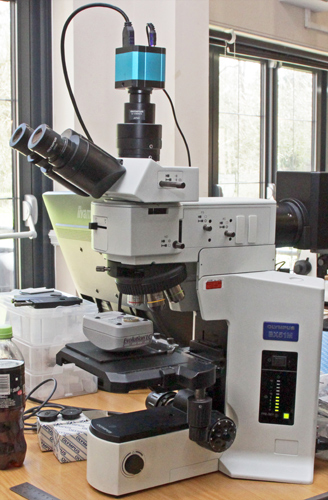
Olympus BX51M metallurgical microscope
February 2026
I went to the workshop on contrast enhancement, led by Chris Thomas, so that I could take notes and photos for the meeting report. It is not easy to make accurate circular stops for dark-ground and Rheinberg illumination, and I was surprised how well the octagonal and square stops that Chris demonstrated worked.
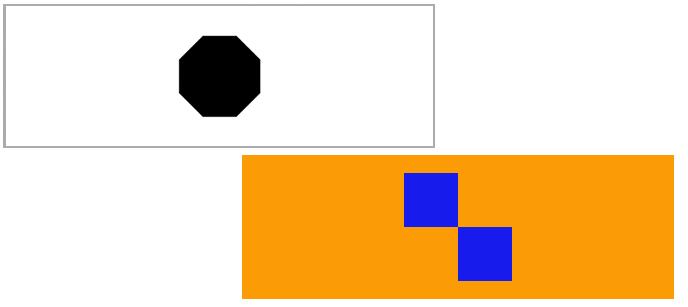
Dark-ground stop and Rheinberg filter
There is no time at workshops to take stacked images, so I took some specimens home to photograph:
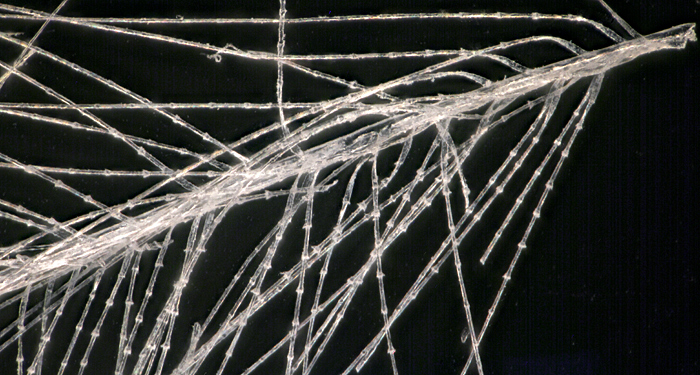
Down feather using dark-ground illumination (BH2-DCD condenser, 10× SPlanApo objective, 56 images at 0.002 mm steps)
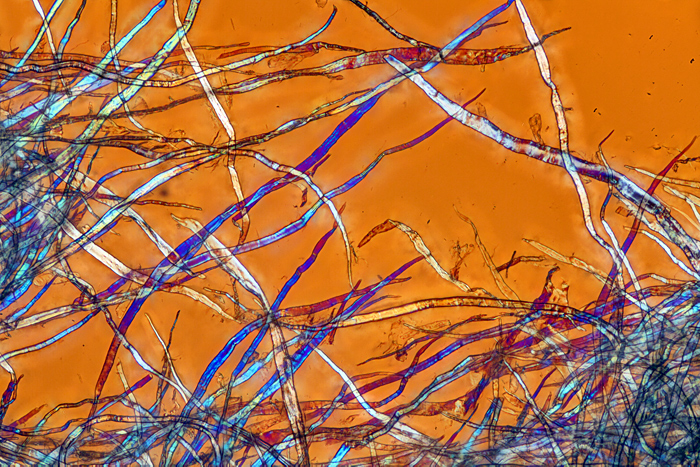
Teased toilet tissue using crossed polarisers plus makeshift retarder (10× SPlan objective, 27 images at 0.01 mm steps)
I have decided to dispose of some of the books and equipment that I no longer use, so on fine days I have been carrying loads of non-microscopy books to my local Oxfam bookshop and British Heart Foundation charity shop. I posted photos of the microscopy books, a dissecting microscope and an illuminator for a stereo microscope in the QuekettMicro group on Facebook.
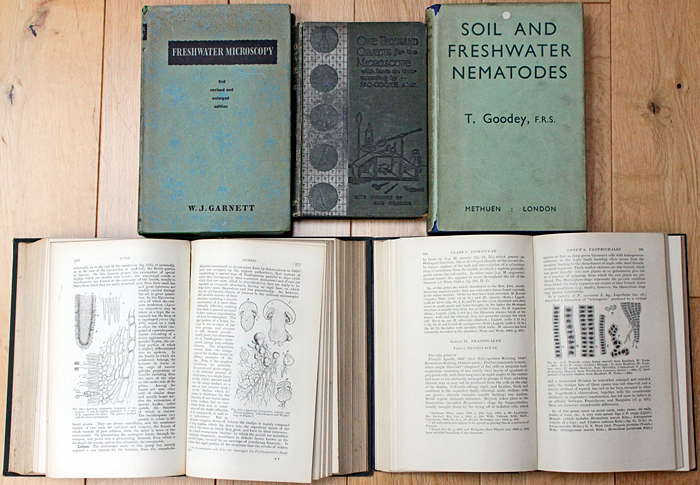
Free books
I was surprised and disappointed that the books were not snapped up. Many people don’t seem interested in books these days.
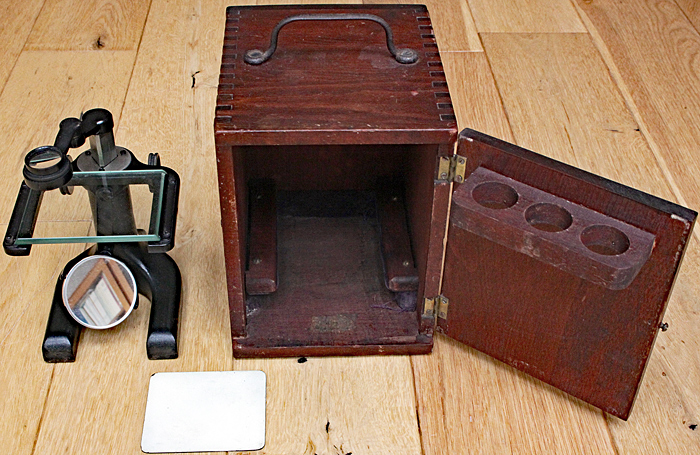
Free Spencer Dissecting Microscope No. 82
The dissecting microscope was claimed in a few minutes, and will be going to a youngster at the Anglian Microscopy Group.
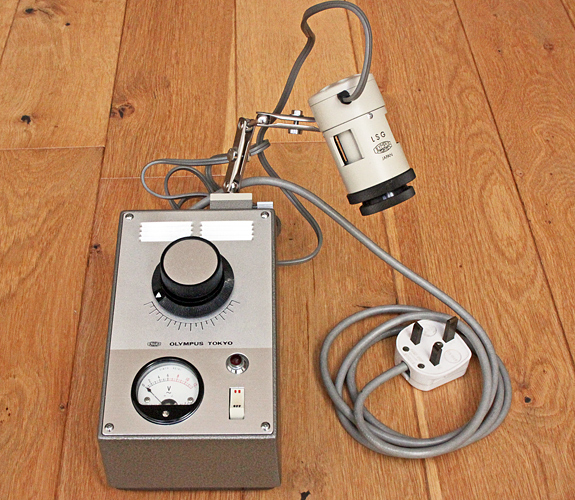
Free Olympus LSG illuminator and TE-II transformer
I didn’t think anyone would want this illuminator, which is less bright and much heavier than an LED ring-light, but three people were interested.
January 2026
The Quekett’s 2026 outreach programme started on a freezing winter day at the “Life Under a Microscope” session of the Wimbledon Common Nature Club. It is run by Auriel Glanville and her assistants (Jen Long, Luci Teuma and Alexander and Oliver Mallett) and welcomes children from 6–14 years old to come and discover the world of nature on the Common. They meet for 2 hours each month in the Information Centre, the same venue as used by Quekett members on excursions, the Weekend of Nature and the Open Day. I took my Olympus SZ4045 stereo microscope with an LED ring-light, a small and simple stereo microscope, and some slides and specimens.
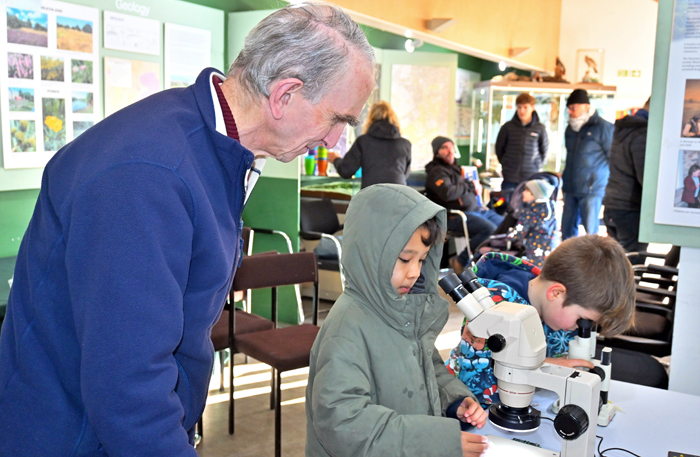
Alan Wood [by Auriel Glanville]
Commenting on this blog
If you would like to comment on anything in this blog, please send me a message.